When Still Stories
Part II — The Branch That Broke
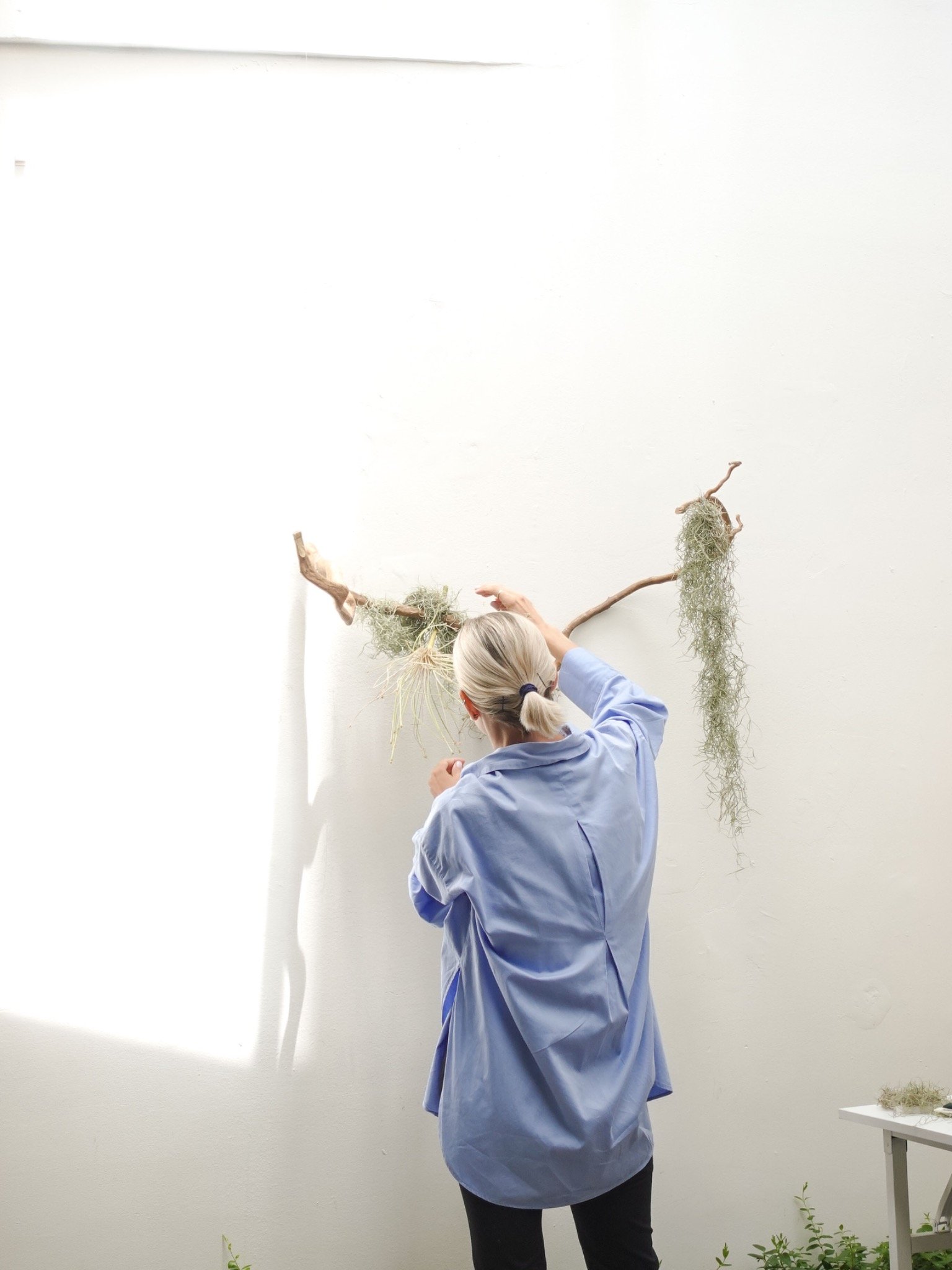
It took me time to understand what happens when I reach into a student’s arrangement. I might only move one branch, but from that moment, the piece becomes a collaboration. I’ve made a choice in a work that, until then, was theirs alone.
Now I ask before I touch the arrangement. If the student agrees, I take a photograph before I make the adjustment and another afterward. I want them to be able to look back at what they made and see what changed when I stepped in. To me, taking both photographs is a way of respecting the design and the person who made it.
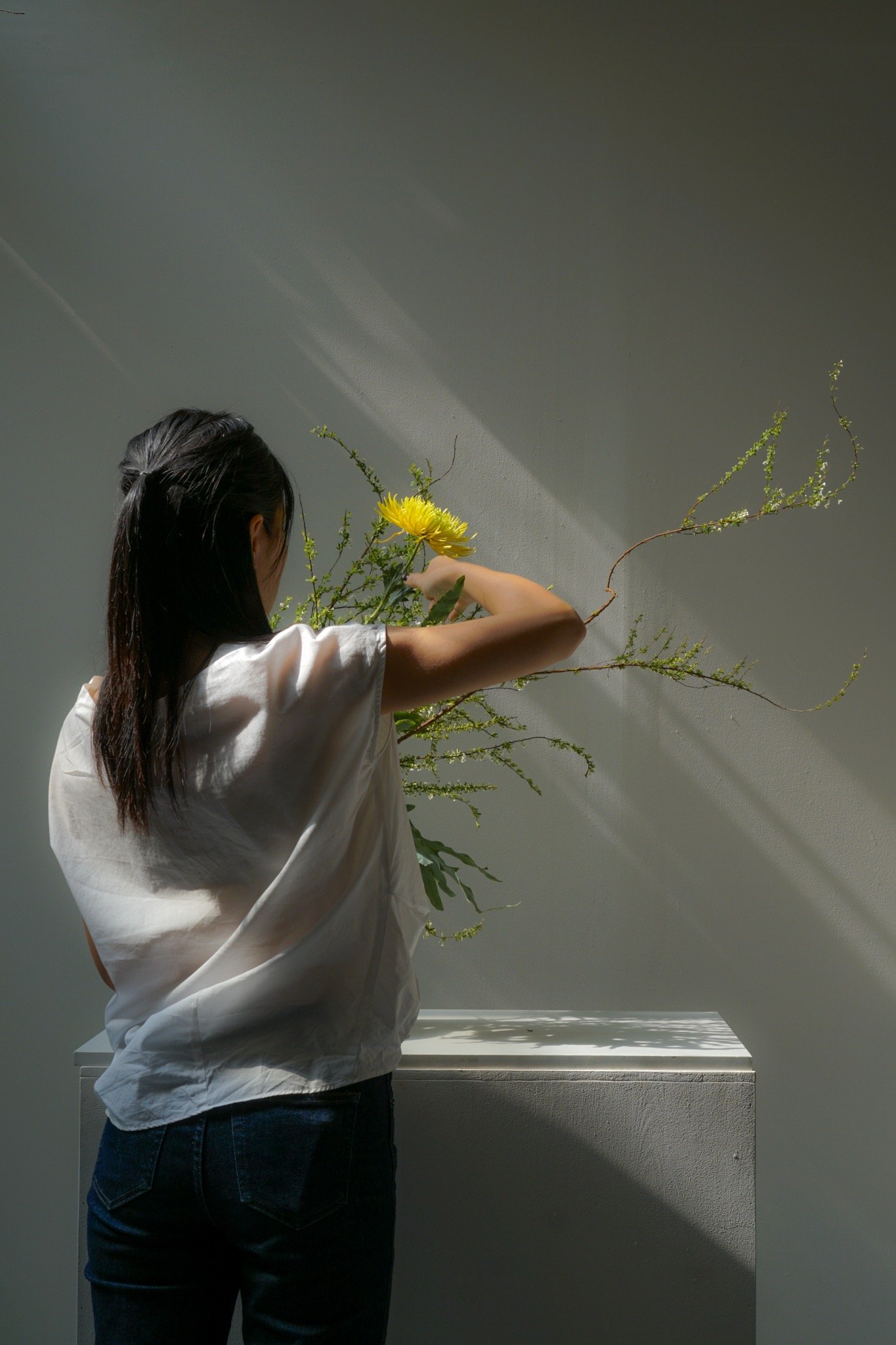
Before I suggest moving a branch, I often ask the student what they saw in the place they chose for it. Their answer changes what I see all the time. Sometimes, once I hear why they put it there, I want to leave it exactly where it is.
I still want to show them what I see. I also want to learn how they see. There’s an intimacy in that exchange. We’re looking at the same branch, and for a moment, each of us gets to see it through the other person’s eyes.
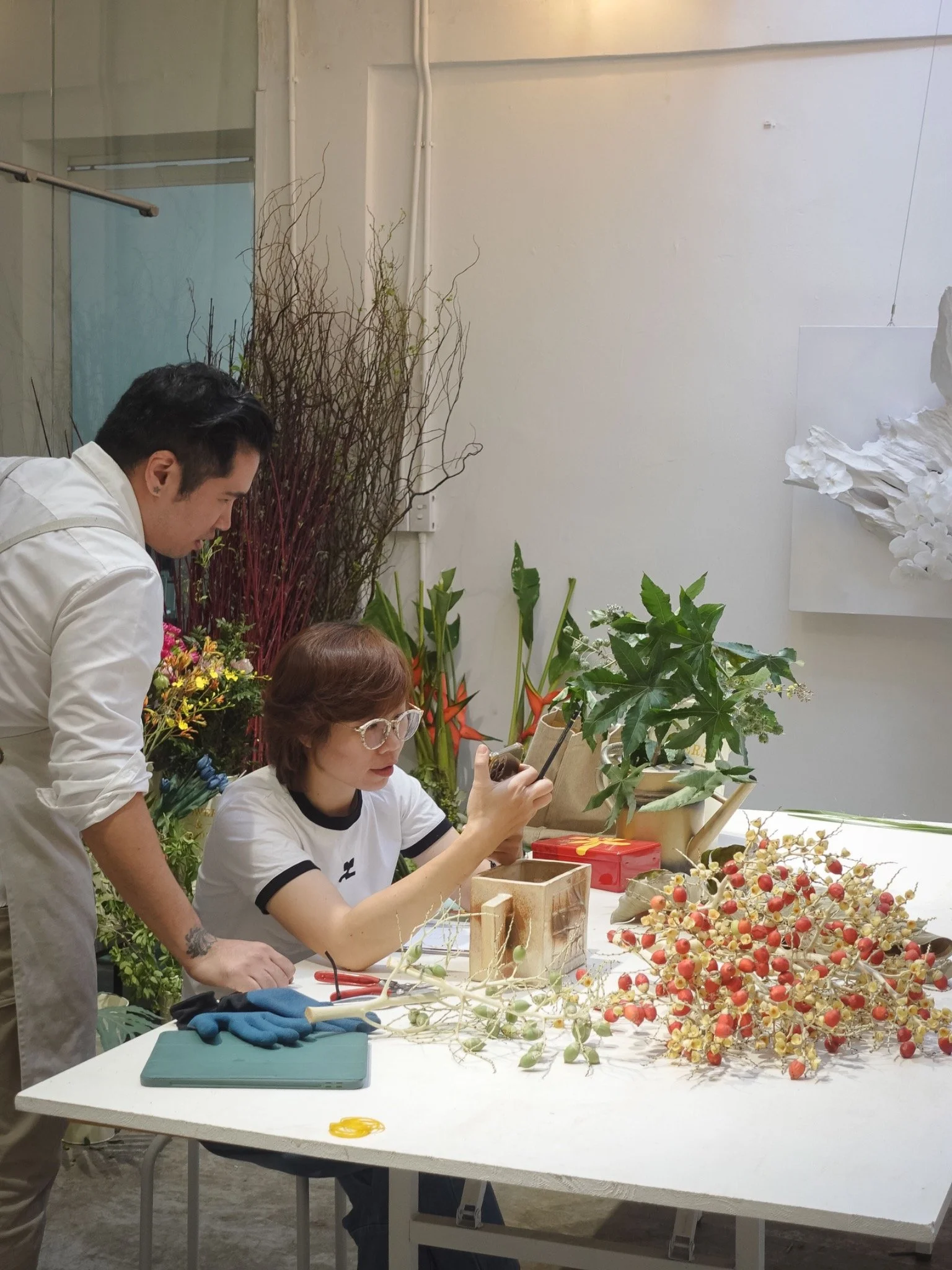
A photograph can show me where a student placed a branch. I still have to ask why they put it there.
In our group critiques at Tre, I sometimes pushed a branch too far. When it snapped, I stopped to repair it with a little floral tape. It took me longer to learn to pause while the branch was still intact. Sometimes, in that pause, the student shows me something I would have dismissed at first glance.