When Still Stories
Part III — The Patient Ones
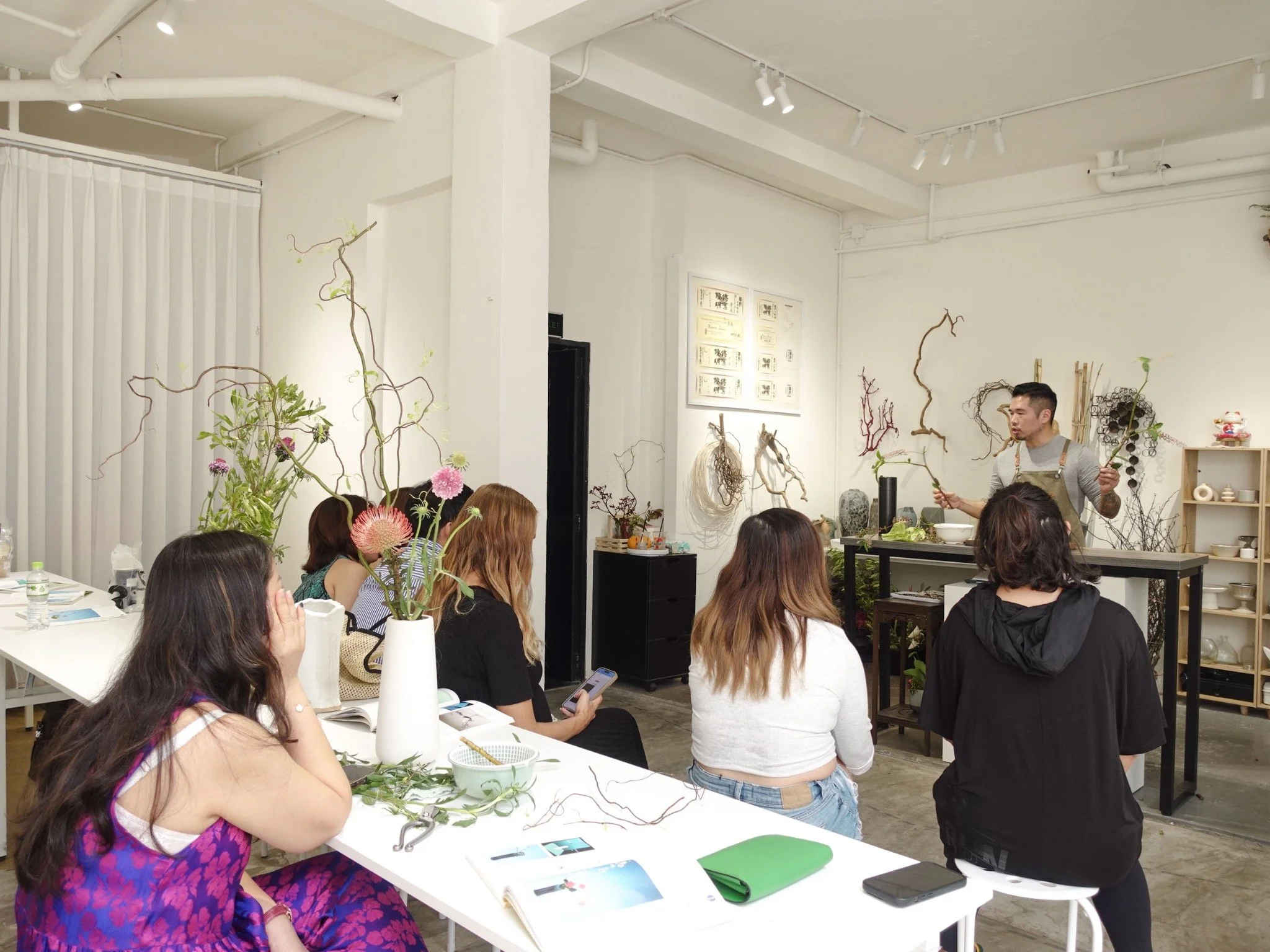
When Rosii and I were teaching ikebana together, we would sometimes look at what the students had made and say to each other, “We should show this.”
People could already see their arrangements online. But in a photograph, someone has already chosen where you stand. In person, you can move a little to one side and see how far a branch reaches, or notice the space between two stems that seemed to touch in the picture. I wanted people to have that experience with the work we were seeing in class.
So we gave the students a space, time, and materials to make something for the public. Some had been studying with us from the beginning. Others had only been practicing for a few months. For many of them, this was their one chance that year to show their work in person.
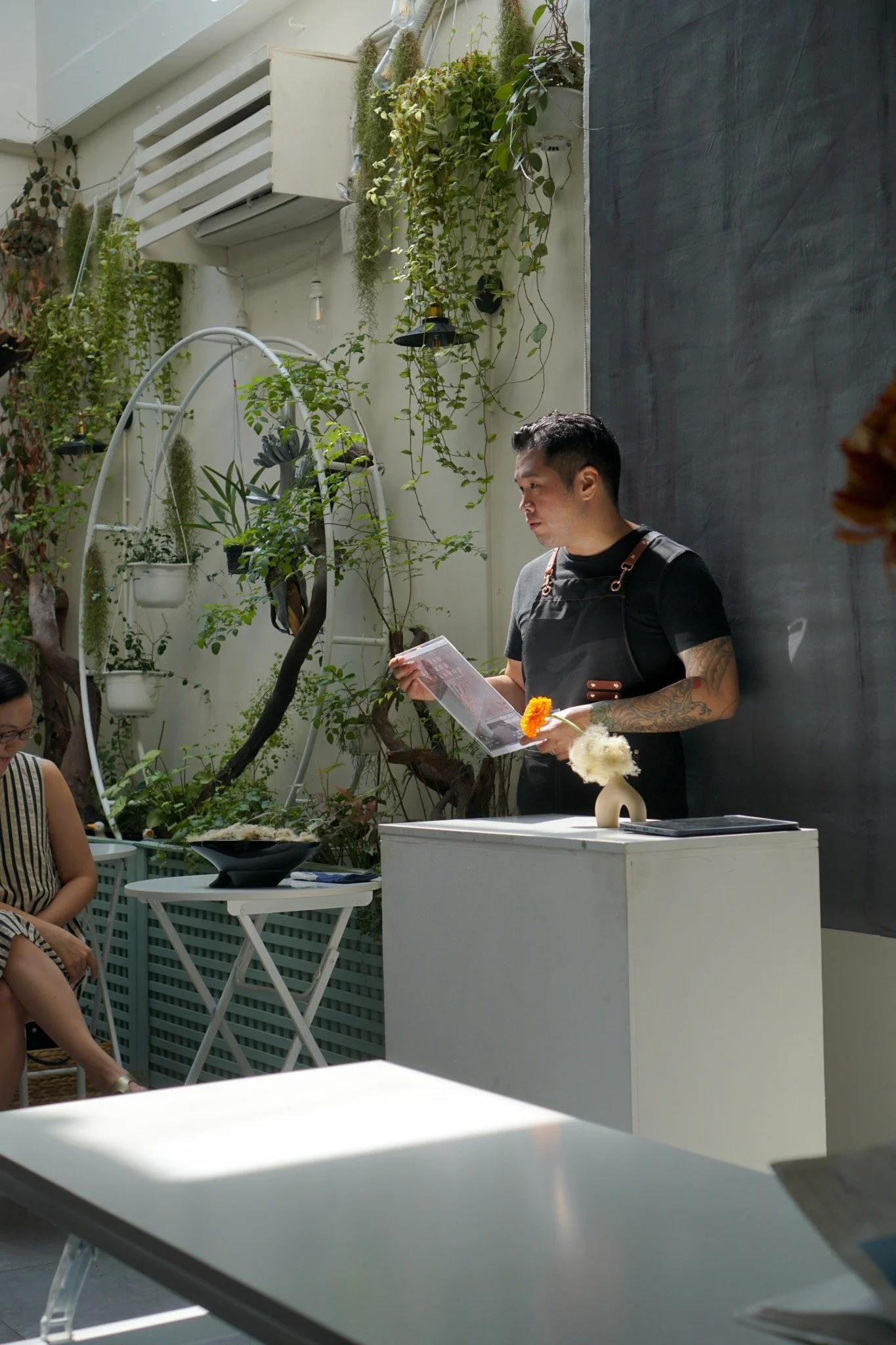
I could see how proud they were. I was proud of them too, but there was something especially moving about watching them begin to see the beauty in their own work. In class, they were used to hearing what I saw in an arrangement. At the exhibition, someone who had never met them could stop in front of their piece, spend time with it, and tell them what they saw.
An arrangement can also become a record of who you were when you made it. Years later, a student might look back and notice how much more confidently they work with a branch now. Or they might find something in an early piece that they had forgotten about themselves and want to explore again. I like that an exhibition gives them a point to look back to.
As When Still grew, I wanted to show more work, bring more people together, and take on larger projects. I imagined what ikebana could become in Vietnam if more people had the chance to encounter it. With each new demand, the team and the students took greater ownership of what we were building together. Every success belonged more to them than to me.
I hoped visitors would learn a little about ikebana and enjoy being around flowers. In a city, it’s easy to pass the same plants every day without really looking at them. If someone stopped long enough to notice the way a stem curved, or the space a few branches could make around themselves, I was happy with that. They could take that way of looking back outside with them.
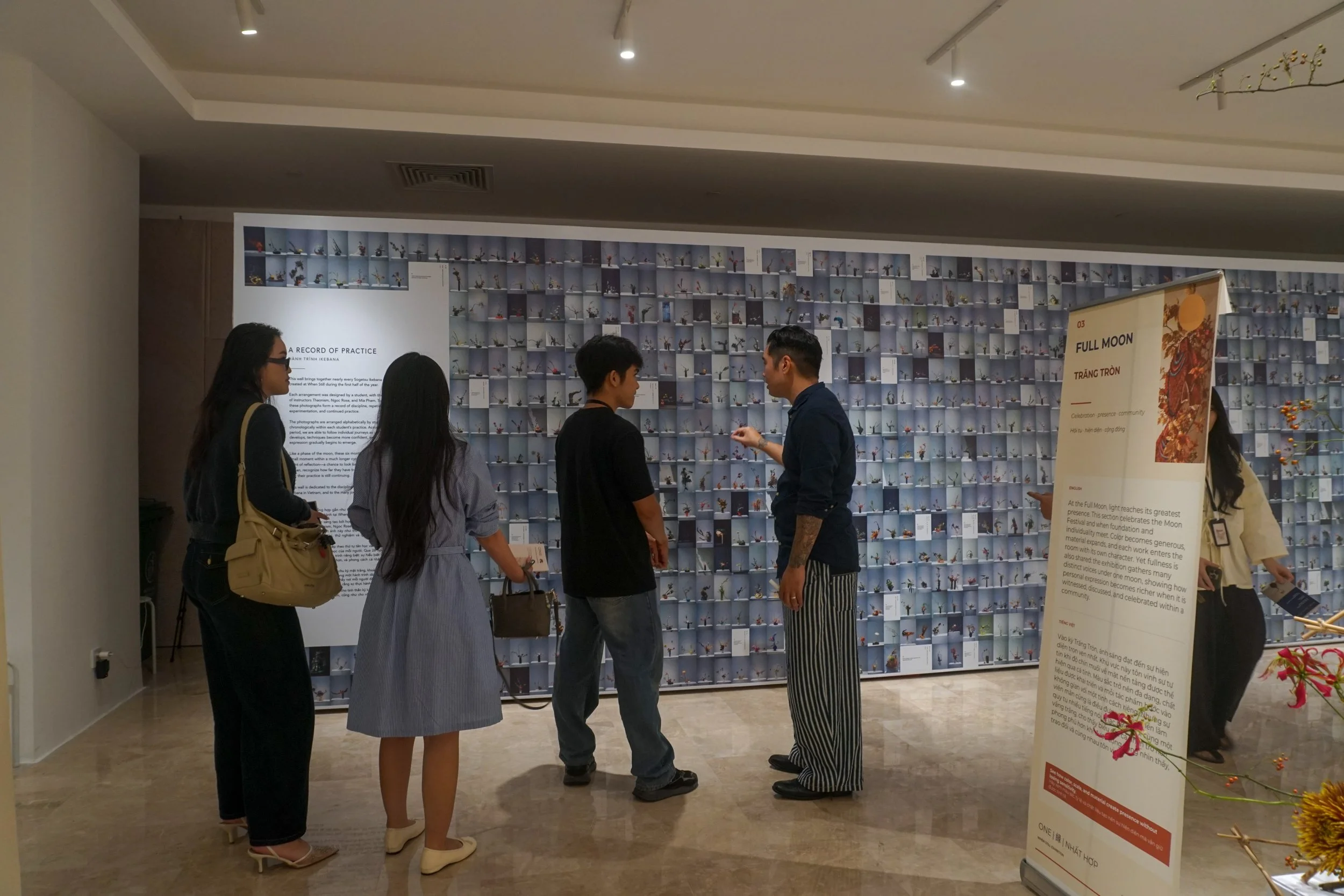
Rosii and I began with a simple thought: more people should see what the students were making. The longer we did this, the more I saw how much of When Still the students were making too.