When Still Stories
Part I — Tại Thầy
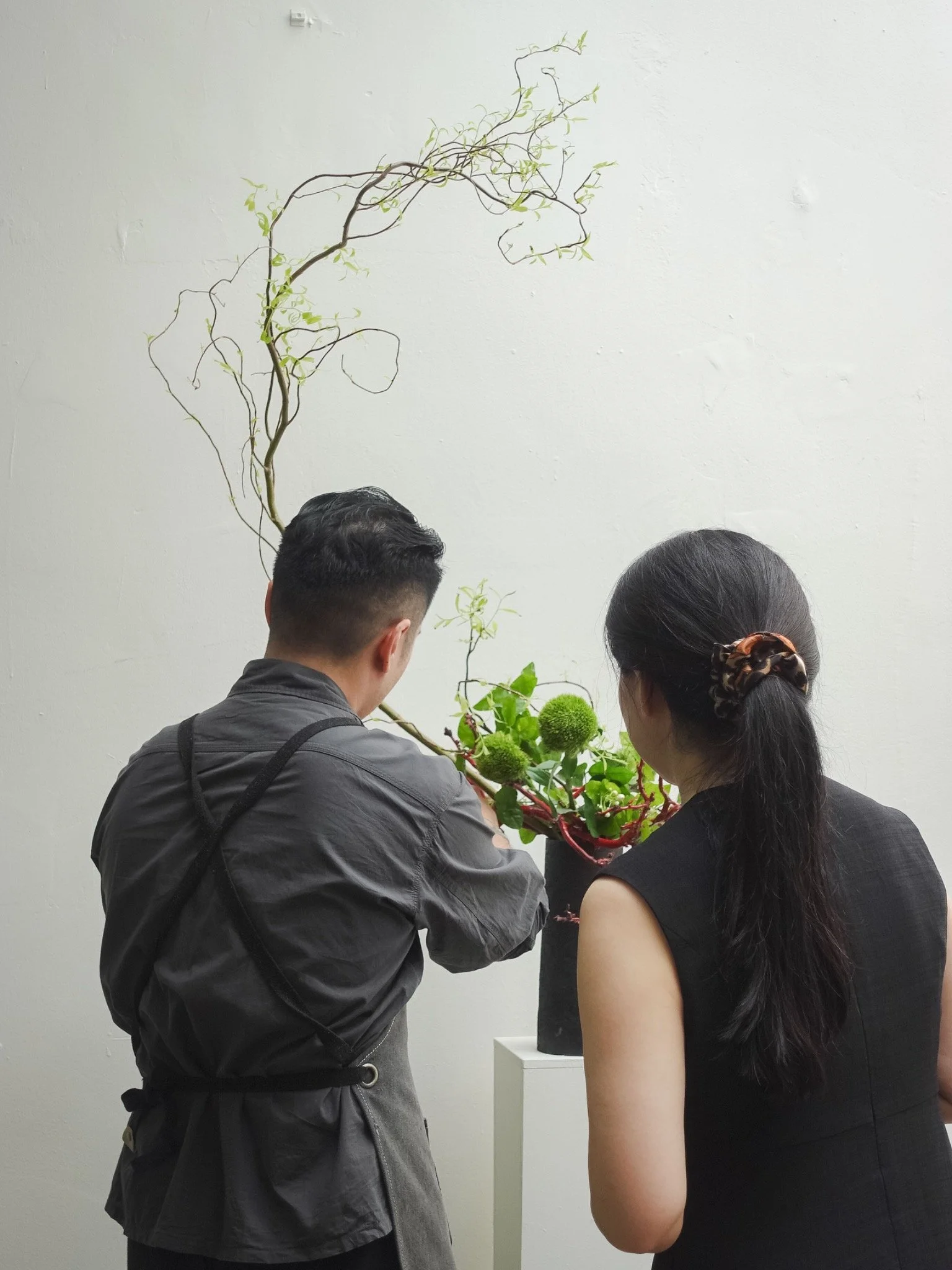
At “Tre,” the studio space where we hosted our workshops, a branch snapped during a critique, and a student gave the moment two words I would carry for years: “Tại thầy.”
When arranging time was up, it was my turn to look at what the students had made. Most critiques went smoothly. Every so often, I’d try to show another possibility and push a branch farther than it could bend.
It was a good-natured tease about the teacher who had just broken the branch. Even the student whose arrangement I was working on laughed. I laughed too, then stopped to repair the branch with a little floral tape. For a moment, the critique changed course. We were all looking at the break and figuring out how to put the arrangement back together.
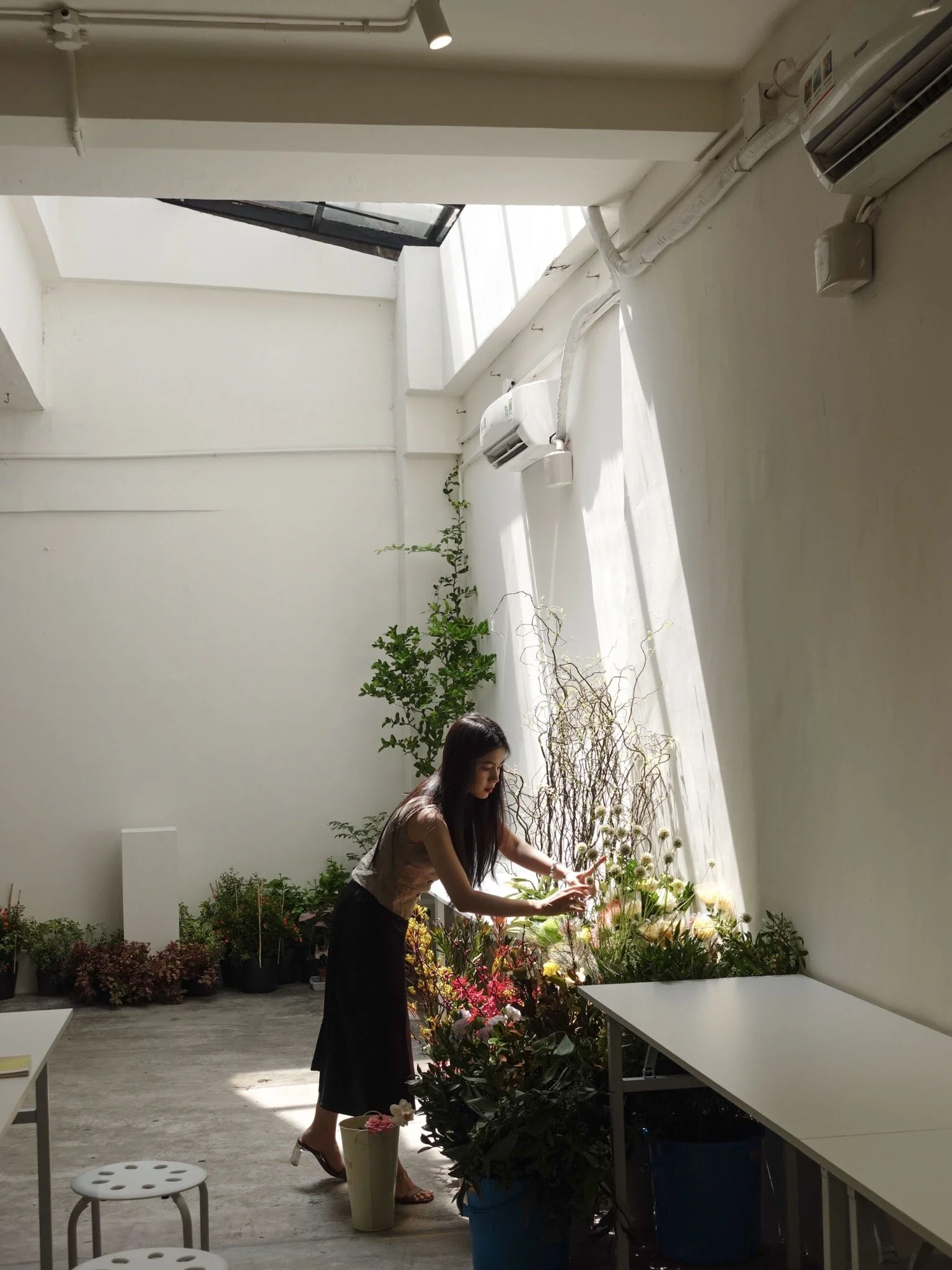
Those moments reminded me of a few things. I needed to photograph a design before making adjustments, so we could remember its original state. I needed to ask the student before changing anything; they might have an intention they wanted to explain first. And if I broke or dismantled something during a critique, it was my responsibility to restore it.
Over time, I began saying “Tại thầy” myself. After sharing a new perspective, pointing out a deeper meaning, or making a small bend in a stem that changed the design, I’d smile and say it. The students laughed then too. I think mostly because I was speaking Vietnamese. They also understood that I was trying to find humor and confidence in what I was doing. The phrase still carried the memory of the snapped branch; now it could accompany a moment of learning as well.
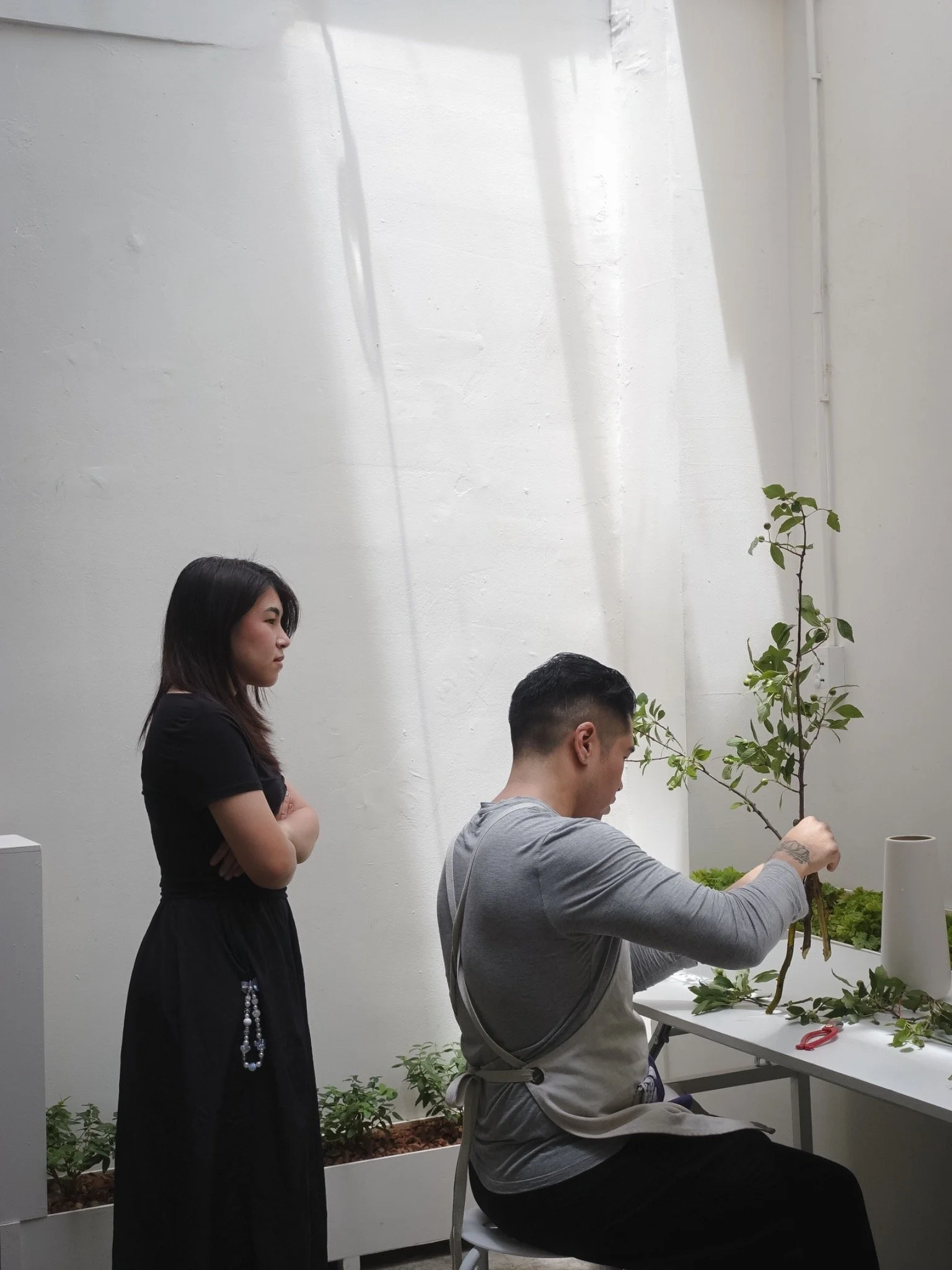
As When Still grew, my ambitions grew with it. I began to imagine that we could become a new epicenter for ikebana throughout Vietnam—a new generation of practitioners carrying the art into the future. I sought larger exhibitions, larger groups, and bigger opportunities. Each one came at a cost. Each one also offered a chance for ikebana to reach more people.
The thought of showing our students’ work to the public began while Rosii and I were teaching together. We would look at what the students had made and say, “We should show this.” People could see photographs online, but seeing the arrangements in person would be different. That idea was the seed of hosting our own student exhibition.
For me, “Tại thầy” came to hold the humour of our classroom and the confidence I sometimes felt when I could offer students another way of seeing. Both meanings belonged to the same relationship: students could laugh with their teacher, and the teacher could still help them look again.